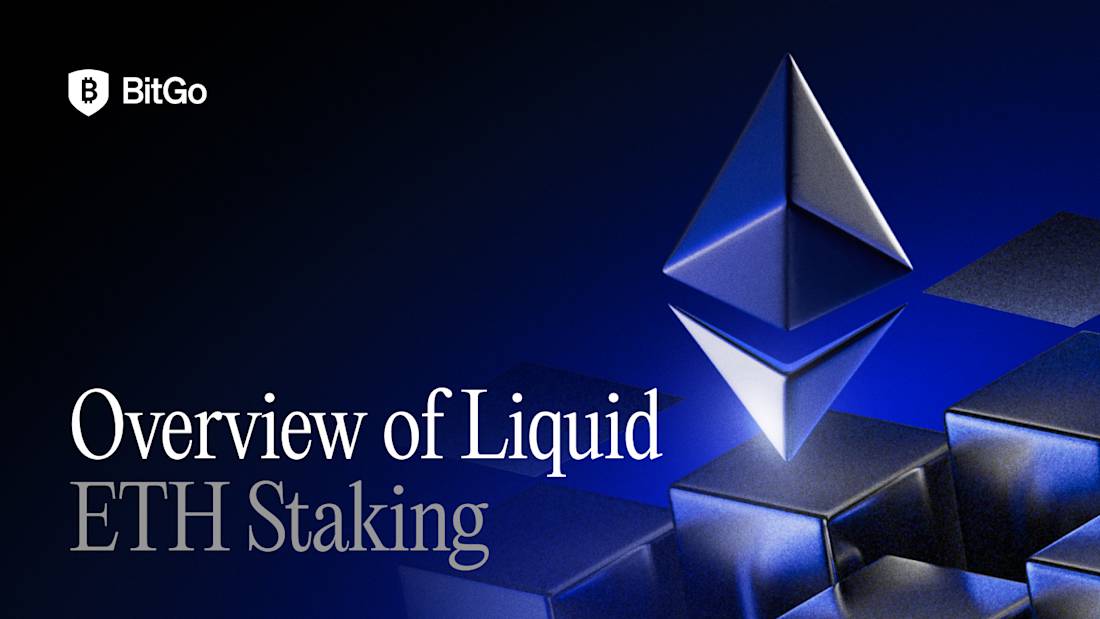
On September 15, 2022, Ethereum underwent its first major upgrade since the transition to a proof-of-stake system, The Merge. This transition from proof of work to proof of stake enabled more Ethereum users to start earning rewards on their ETH holdings by staking them to validate transactions and secure the network.
However, users were required to commit to locking these tokens up for an indeterminate period of time. More changes are in store to address this issue with Ethereum’s Shanghai upgrade tentatively scheduled for March 2023. The major feature of Shanghai is that Ethereum stakers will be able to withdraw staked Ethereum and staking rewards.
This Shanghai upgrade has also ignited interest in liquid staking and liquid staking derivatives.
What is staking?
Proof of stake is a method by which blockchains like Ethereum and others reach consensus. Users commit — or stake — their holdings to secure the network and validate transactions. Rewards are in proportion to the total staked, and users can be penalized for fraudulent or malicious behavior by having their stake “slashed,” incentivizing all validators to behave properly. You can learn more about staking here.
What is liquid staking?
While the Merge allowed more users to participate in the Ethereum network and earn rewards for this participation, it came with several limitations. These include the requirement to have at least 32 ETH to run a validator plus the need to lock up this ETH for a prolonged and undefined period of time to participate in staking. Liquid staking protocols emerged as a solution to these two barriers to entry.
Liquid staking works by pooling together the holdings of large groups of network participants to validate transactions on the Ethereum blockchain. Liquid staking allows users to stake and unstake Ethereum in relatively seamless fashion.This is achieved through the issuance of a tokenized version of the staked asset, which can be transferred, stored, or traded just like the regular token.
For example, a user can deposit 10 ETH into the smart contract of a liquid staking pool like Lido Finance and receive 10 stETH in exchange. They can then use stETH on a variety of decentralized platforms while earning daily staking rewards from the liquid staking protocol.
Advantages of liquid staking
The biggest advantage of liquid staking is the ability to maintain liquidity when compared to traditional forms of staking. Liquid staking gives users more flexibility than traditional staking; they can opt out at any time or adjust holdings depending on market conditions. This means that stakeholders can react swiftly to changing market dynamics and reduce risk exposure accordingly.
In short, liquid staking platforms allow crypto holders to earn rewards from their digital assets without directly locking up their funds for a predetermined time period, allowing them to respond to market conditions.
Limitation of liquid staking
Centralized providers cannot stake all of the Ethereum on their platforms (to cover withdrawals by other users). So rewards from staking on a centralized platform can be lower than staking with a decentralized provider. Additionally, staking through a centralized exchange is inherently less decentralized and requires users to trust the platform they’re using.
Current status of liquid staking solutions
Liquid staking solutions have quickly gained popularity and garnered significant market value. According to data from Dune Analytics, approximately 13.5% of all Ethereum is now locked into staking protocols. By the middle of January 2023, the total of staked Ethereum passed the 16 million ETH mark.
Liquid staking providers like Lido Finance have quickly risen to prominence by offering their solutions to investors. Lido Finance’s liquid staking token, Lido Staked Ethereum (stETH), has garnered a market capitalization of over $8 billion and is now the twelfth largest cryptocurrency by market valuation. According to data from DefiLlama, Lido now has the largest total value locked (TVL) on the Ethereum network with nearly 30% of all TVL on Ethereum.
Meanwhile, staked Ethereum on decentralized provider Rocket Pool is approaching the $1 billion mark. Rocket Pool is the third largest liquid staking protocol on Ethereum. Frax Finance, issuer of the FRAX stablecoin, also offers liquid Ethereum staking via its own unique two-token model. Frax Finance, issuer of the FRAX stablecoin, also offers liquid Ethereum staking via its unique two-token model.
Through its platform, users can deposit their ETH and receive a liquid derivative token called Frax Ether (frxETH), aimed at unlocking the value of the staked tokens. The rewards can be collected by exchanging frxETH to Staked Frax Ether (sfrxETH), a second token that will accrue staking rewards from Frax’s Ethereum validators. Frax Ether currently has a TVL of $135 million.
The rewards available from each of these options will vary from platform to platform, and they change on a regular basis based on demand and how much of the total Ethereum supply is staked. However, they are all competitive with (and often superior to) the yields that investors can receive from investing in popular dividend stocks or ten-year treasury bonds.
Takeaway
Liquid staking provides a solution to the limitations of traditional staking, giving users more flexibility and liquidity options. As a leading secure digital asset storage provider, BitGo recognizes the potential benefits of liquid staking and the growing interest in this area.
We are constantly exploring ways to provide innovative and secure staking solutions to our clients, while staying mindful of the limitations of centralized providers. With interest in Ethereum staking continuing to grow, we believe that the demand for staking solutions will continue to grow and we are committed to being at the forefront of this exciting development in the blockchain space.
Choosing institutional staking with BitGo
When you stake at BitGo, our platform offers a simple and flexible solution for earning rewards on your digital assets. With one-click staking, you can start earning rewards immediately from your BitGo crypto wallet, and see all of your staked assets in a single view.
With a variety of supported assets and a choice of using our default validator or our MMI integration, you can tailor your staking experience to your specific needs. Delegate with confidence, knowing that your funds are protected and uptime is maximized to generate the most rewards possible.
BitGo currently supports staking for the following digital assets: Algorand, Avalanche, Casper, Dash, Ethereum, NEAR Protocol, NuCypher, Polygon (ERC-20), SKALE Network, Solana, Stacks, and Tezos.
Get Started
Connect with our team at sales@bitgo.com.
Table of Contents
The latest
All News


About BitGo
BitGo is the digital asset infrastructure company, delivering custody, wallets, staking, trading, financing, and settlement services from regulated cold storage. Since our founding in 2013, we have been focused on accelerating the transition of the financial system to a digital asset economy. With a global presence and multiple regulated entities, BitGo serves thousands of institutions, including many of the industry's top brands, exchanges, and platforms, and millions of retail investors worldwide. For more information, visit www.bitgo.com.
©2025 BitGo, Inc. (collectively with its parent, affiliates, and subsidiaries, “BitGo”). All rights reserved. BitGo Bank & Trust, National Association (“BitGo Bank & Trust”) is a national trust bank chartered and regulated by the Office of the Comptroller of the Currency (OCC). BitGo Bank & Trust is a wholly-owned subsidiary of BitGo Holdings, Inc., a Delaware corporation headquartered in Palo Alto, California. Other BitGo entities include BitGo, Inc. and BitGo Prime LLC, each of which is a separately operated affiliate of BitGo Bank & Trust.
BitGo does not offer legal, tax, accounting, or investment advisory services. The information contained herein is for informational and marketing purposes only and should not be construed as legal, tax, or investment advice. You should consult with your own legal, tax, and investment advisor for questions about your specific circumstances.
Digital assets are subject to a high degree of risk, including the possible loss of the entire principal amount invested. Past performance and illustrative examples do not guarantee future results. The value of digital assets can fluctuate significantly and may become worthless. No BitGo communication is intended to imply that any digital asset services are low-risk or risk-free. BitGo is not a registered broker-dealer and is not a member of the Securities Investor Protection Corporation (“SIPC”) or the Financial Industry Regulatory Authority (“FINRA”). Digital assets held in custody are not guaranteed by BitGo and are not subject to the insurance protections of the Federal Deposit Insurance Corporation (“FDIC”) or SIPC. Custody and other digital asset services are subject to eligibility, jurisdictional, and regulatory restrictions. Availability of specific products and services may vary by location and entity.
BitGo endeavors to provide accurate information on its websites, press releases, blogs, and presentations, but cannot guarantee all content is correct, completed, or updated. Content is subject to change without notice. BitGo disclaims any obligation to update or supplement such information except as required by applicable law or regulation.
BitGo makes no representation that the information contained herein is appropriate for use in any jurisdiction where its distribution or use would be contrary to law or regulation or would subject BitGo or any of its affiliates to any registration or licensing requirements in such jurisdiction. Persons who access this information are responsible for complying with all applicable laws and regulations.