
If you’ve ever sent or received bitcoin—whether just a few sats or a hefty stack of BTC—you’ve interacted with Unspent Transaction Outputs, or UTXOs, even if you didn’t realize it. These digital building blocks are the backbone of bitcoin’s transaction system, silently ensuring that every payment flows securely and efficiently across the network.
Though they might sound like obscure technical details, UTXOs play a crucial role in how your wallet functions and how much you pay in transaction fees. Understanding them isn’t just for blockchain developers—it’s a fundamental part of being a savvy bitcoin user. A little knowledge of UTXO management can help you optimize your transactions, minimize fees, and make the most of your bitcoin holdings. In this guide, you’ll learn what UTXOs are, how they impact your wallet, and why mastering them can make your bitcoin experience smoother and more cost-effective.
What Are UTXOs?
UTXOs are unlike a bank account that tracks one fluid number. Instead, bitcoin treats your funds as distinct pieces. Picture your bitcoin wallet like a physical one, with a handful of separate “bills,” each holding their unique value. These bills are your UTXOs—unspent outputs from past transactions you’ve received. For instance, if your wallet holds 0.52 BTC, that balance might be a patchwork of UTXOs, like 0.1 BTC, 0.25 BTC, and 0.17 BTC, similar to how $20 in your wallet could be made up of one $10 bill and two $5 bills.
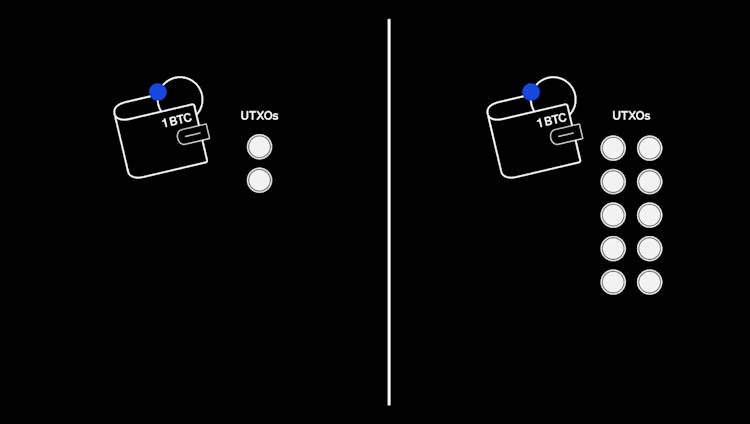
When you send bitcoin, your wallet doesn’t just dip into one big pool—it selects and combines your UTXOs to match the amount you need. Any excess comes back to you as “change” in the form of a shiny new UTXO. It’s a bit like paying with cash: if you owe $5 but only have a $10 bill, you hand over the whole thing and get $5 back. Bitcoin follows the same logic. UTXOs can’t be sliced up, so the entire “bill” gets spent each time, with leftovers rerouted back to your wallet.
Every bitcoin transaction has two parts: inputs and outputs. The inputs are the old UTXOs you’re spending, while the outputs are the new UTXOs created—one for the recipient and often one for your change. Simple, right?
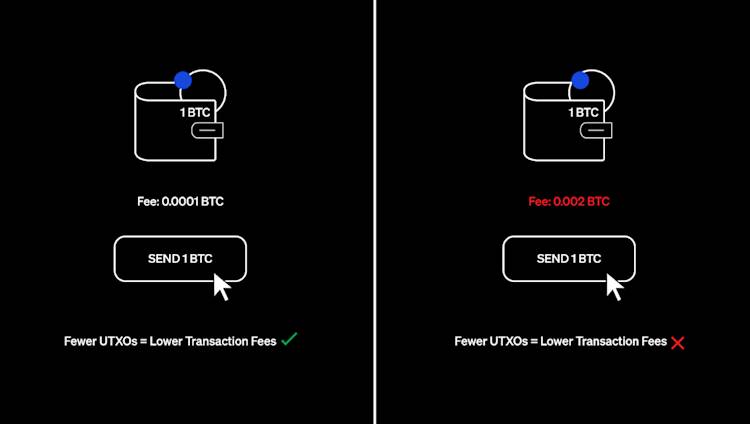
Here’s where it gets interesting: transactions can have multiple inputs and outputs. The more UTXOs you use as inputs, the bigger the transaction becomes in terms of data size. And in bitcoin, fees aren’t based on the amount you’re sending—they’re tied to the data size of the transaction. More UTXOs = bigger transactions = higher fees.
Why Fees Depend on UTXOs
Let’s break that down with an example. Sending 1 BTC using three UTXOs will cost less in fees than sending the same 1 BTC using 17 UTXOs. It’s all about efficiency. Back in 2021, someone famously moved $2 billion in Bitcoin for just 78 cents. How? They planned their transaction to use minimal UTXOs, keeping the data size tiny. Smart UTXO management can save you a lot, especially if you’re dealing with lots of small payments over time.
Who Needs to Care About UTXOs?
Not everyone needs to obsess over UTXOs. If you’re a long-term holder who rarely moves bitcoin, you’re probably fine. But if you’re stacking sats—buying small amounts regularly—or running a business with frequent transactions, UTXOs can pile up. Lots of tiny UTXOs mean higher fees down the road when you finally decide to spend or have to consolidate them.
Managing your UTXOs ahead of time can save you from a large transaction fee later.
The Fix: UTXO Consolidation
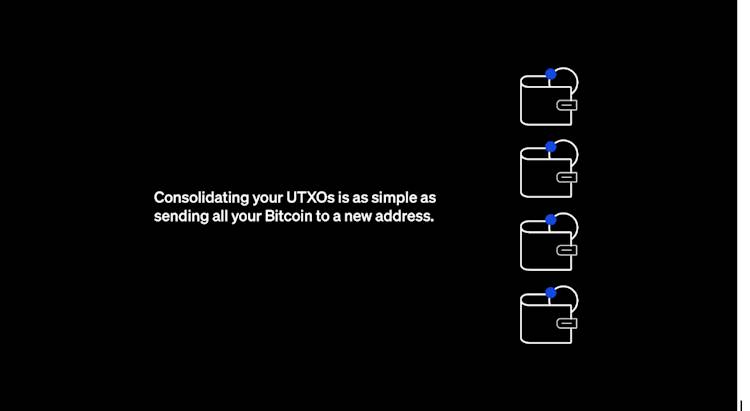
Good news—there’s a way to manage this. UTXO consolidation means combining small UTXOs into fewer, larger ones to save on future fees. It’s as straightforward as sending bitcoin to yourself in a single transaction. Say you’ve got 10 small UTXOs worth 0.1 BTC each. You could send them all to one address, paying a fee now—maybe $50—to create a single 1 BTC UTXO. That might sound steep, but if Bitcoin’s price rises or the network gets congested (like during past cycles), fees could skyrocket later. Consolidating now could save you a lot of money later.
The trick is timing. You’ll want to consolidate when fees are low, which happens periodically during market lulls or times when people simply are not using the network as much. A handy tool like mempool.space can show you current bitcoin fee rates so you can pick the right moment.
So, the next time you’re stacking sats, sending BTC to a friend, or even just checking your wallet balance, give a quick nod to your UTXOs. They’re working hard behind the scenes, and a little attention to them now can pay off later. Double-check those addresses before you hit send—mistakes can be costly in bitcoin. Keep an eye out for those low-fee windows to consolidate if they fit your strategy.
Bitcoin’s beauty lies in its blend of simplicity and depth, and UTXOs are a perfect example of that. They’re straightforward enough to grasp, yet they open the door to smarter, more intentional use of the network. If you’re a business or institution that is looking for help consolidating your UTXO, or learning more about the digital asset space, connect with us here.
The latest
All News


About BitGo
BitGo is the digital asset infrastructure company, delivering custody, wallets, staking, trading, financing, and settlement services from regulated cold storage. Since our founding in 2013, we have been focused on accelerating the transition of the financial system to a digital asset economy. With a global presence and multiple regulated entities, BitGo serves thousands of institutions, including many of the industry's top brands, exchanges, and platforms, and millions of retail investors worldwide. For more information, visit www.bitgo.com.
©2026 BitGo, Inc. (collectively with its parent, affiliates, and subsidiaries, “BitGo”). All rights reserved. BitGo Bank & Trust, National Association (“BitGo Bank & Trust”) is a national trust bank chartered and regulated by the Office of the Comptroller of the Currency (OCC). BitGo Bank & Trust is a wholly-owned subsidiary of BitGo Holdings, Inc., a Delaware corporation headquartered in Palo Alto, California. Other BitGo entities include BitGo, Inc. and BitGo Prime LLC, each of which is a separately operated affiliate of BitGo Bank & Trust.
BitGo does not offer legal, tax, accounting, or investment advisory services. The information contained herein is for informational and marketing purposes only and should not be construed as legal, tax, or investment advice. You should consult with your own legal, tax, and investment advisor for questions about your specific circumstances.
Digital assets are subject to a high degree of risk, including the possible loss of the entire principal amount invested. Past performance and illustrative examples do not guarantee future results. The value of digital assets can fluctuate significantly and may become worthless. No BitGo communication is intended to imply that any digital asset services are low-risk or risk-free. BitGo is not a registered broker-dealer and is not a member of the Securities Investor Protection Corporation (“SIPC”) or the Financial Industry Regulatory Authority (“FINRA”). Digital assets held in custody are not guaranteed by BitGo and are not subject to the insurance protections of the Federal Deposit Insurance Corporation (“FDIC”) or SIPC. Custody and other digital asset services are subject to eligibility, jurisdictional, and regulatory restrictions. Availability of specific products and services may vary by location and entity.
BitGo endeavors to provide accurate information on its websites, press releases, blogs, and presentations, but cannot guarantee all content is correct, completed, or updated. Content is subject to change without notice. BitGo disclaims any obligation to update or supplement such information except as required by applicable law or regulation.
BitGo makes no representation that the information contained herein is appropriate for use in any jurisdiction where its distribution or use would be contrary to law or regulation or would subject BitGo or any of its affiliates to any registration or licensing requirements in such jurisdiction. Persons who access this information are responsible for complying with all applicable laws and regulations.